


Fr. Matthew Mary | August 4, 2026
Today we celebrate the feast of St. John Vianney, the Curé of Ars and the patron saint of parish priests. He is famous for hearing confessions from 12 to 18 hours a day during the last decades of his life. In his announcement of the Year of Priests in 2009, Pope Benedict XVI invoked the example of St. John Vianney as a model for all priests to emulate. He says about the Saint:
“[St. John Vianney] recognized in the practice of the sacrament of penance the logical and natural fulfillment of the priestly apostolate, in obedience to Christ’s mandate: ‘if you forgive the sins of any, they are forgiven; if you retain the sins of any, they are retained’. [He] thus distinguished himself as an excellent, tireless confessor and spiritual director. Passing ‘with a single inner impulse from the altar to the confessional’, where he spent a large part of the day, he did his utmost with preaching and persuasive advice to help his parishioners rediscover the meaning and beauty of the sacrament of Penance, presenting it as an inherent demand of the Eucharistic presence.”
However, as beloved as today’s saint is in the hearts and minds of the Catholic faithful, St. John Vianney underwent his own struggles earlier in his life that shaped his priestly ministry later.
From Tragedy to Grace
In an article published in 2020 entitled “The Heart of a Priest,” Fr. Frederick Miller recalls a story about St. John Vianney that is perhaps not as widely known as the saint’s extraordinary habit of hearing confessions for hours at a time. Like many people who experience hardships and traumatic events, St. John Vianney experienced an event early on that would shape the rest of his life and even his ministry as a priest. It is ultimately by the grace of God that the trauma he experienced would be transformed into a source of grace for so many people who came to him to encounter the healing power of Christ through the sacrament of penance.
John Vianney felt the call to the priesthood during the tumultuous period in history known as the French Revolution. The Church in France suffered from a schism that formed due to a law that subjected much of the governance of the Church to the civil government. French Catholics were basically forced to choose between belonging to a Church that was governed by the State or an underground Church that strove to remain loyal to the Magisterium. Since the family of John Vianney chose to remain with the underground Church, John had to receive the sacraments clandestinely. He personally witnessed priests who risked their lives to exercise their priestly ministry without government interference so that the underground Catholic faithful might have access to the sacraments.

The Draft and Devastating Loss
When the emperor Napoleon came to power, the underground Church was able to reemerge and function normally and publicly. At the time, John Vianney was in the process of entering minor seminary and had even been accepted. However, his plans were derailed when he was drafted into the military due to an oversight of someone in the administration who neglected to indicate that Vianney was a seminarian. This would have exempted him from being included in the draft.
From the beginning of his military service, Vianney struggled greatly to keep pace with his battalion owing to an illness and his own clumsiness. As he continually failed to keep up with his comrades in arms, he was officially classified as a deserter. However, his brother enlisted to take his place so that John would not be charged with a crime but would be granted amnesty. Later, as John returned home to his family, he learned from his father that his brother, the one who had replaced him in the army, died on a battlefield in Spain.
Furthermore, his mother died of a broken heart upon hearing the news that her son had fallen in battle. The father of John Vianney placed the blame for these deaths upon the Saint and ordered him to go visit the graves of his mother and brother. John was never welcomed back home by his father again and there is no evidence that his father ever forgave him, even though he had begged his forgiveness.
Conversion of Heart
This experience of unforgiveness from his father influenced his early priestly ministry. At first, he adopted the rigorism and morbid scrupulosity of the Jansenists, a movement that had been sweeping through major areas of France at the time. In confession he imitated the rigorist style of the Jansenists and would impose heavy penances upon his penitents.
However, at some point, Vianney realized that this kind of rigorism was contrary to the loving, merciful approach of Jesus Christ. While it is not entirely clear what specifically led to John Vianney’s conversion of heart, Fr. Miller says this in his article:
“He had heard many mission preachers influenced by the kinder approach of St. Alphonsus Liguori. He confessed his sins and sought guidance from some of these priests. He began to read the moral theology of St. Alphonsus. He spent long hours in prayer. He had a devotion to the Sacred Heart of Jesus and Our Lady. He found a heavenly friend in St. Philomena. Whatever happened, whenever it happened, the Holy Spirit prompted Vianney to open the wound in his heart to the love of Christ. In this experience, the Spirit of God created the heart of a priest in the wounded heart of John Vianney. It was then that the pilgrimages to Ars began. People started coming from far and wide to open their hearts to him. They never stopped coming!”
As St. John of the Cross has famously said:
“When a wound of love [of Christ] touches a soul that has already been wounded by its own sins and miseries, that soul becomes wounded by love. At the same instant all of these wounds of the soul that came from other causes suddenly become wounds of love.”
It is quite possible that the woundedness John Vianney carried in his heart from his father’s unforgiveness was transformed by the wounds of Christ on the Cross.
A Pastor Transformed
Through his powerful encounter with Christ crucified, St. John Vianney had been completely transformed. He exhibited heartfelt compassion for the people to whom he ministered. He started an orphanage and a school for young girls as well as a school for boys at his parish, gave food to any homeless person he encountered, and even opened his home to anyone who came to him in need. There were times when he fasted from food entirely so that he might give it all away to the poor.
He would also exchange his clothes with poor people who often wore tattered rags so that they would have a nicer wardrobe. His disheveled appearance became a source of embarrassment for his fellow parish priests who also might have envied the fact that many of their parishioners were going to Vianney for confession. In fact, he became so odious to the other priests in his diocese that they compiled a petition to have him removed as pastor of Ars. Vianney happened to see the petition left on a table by mistake and, rather than throwing it away, he signed it himself.
In the confessional, where the Curé of Ars had previously been severe in his treatment of penitents and assigned them heavy penances before they would receive absolution, his heart was softened by the love and mercy of Jesus Christ. While he still firmly held to the moral law and to the teaching of the Church in matters of sin, his handling of penitents reflected more closely a loving father towards his children rather than a harsh judge towards criminals.
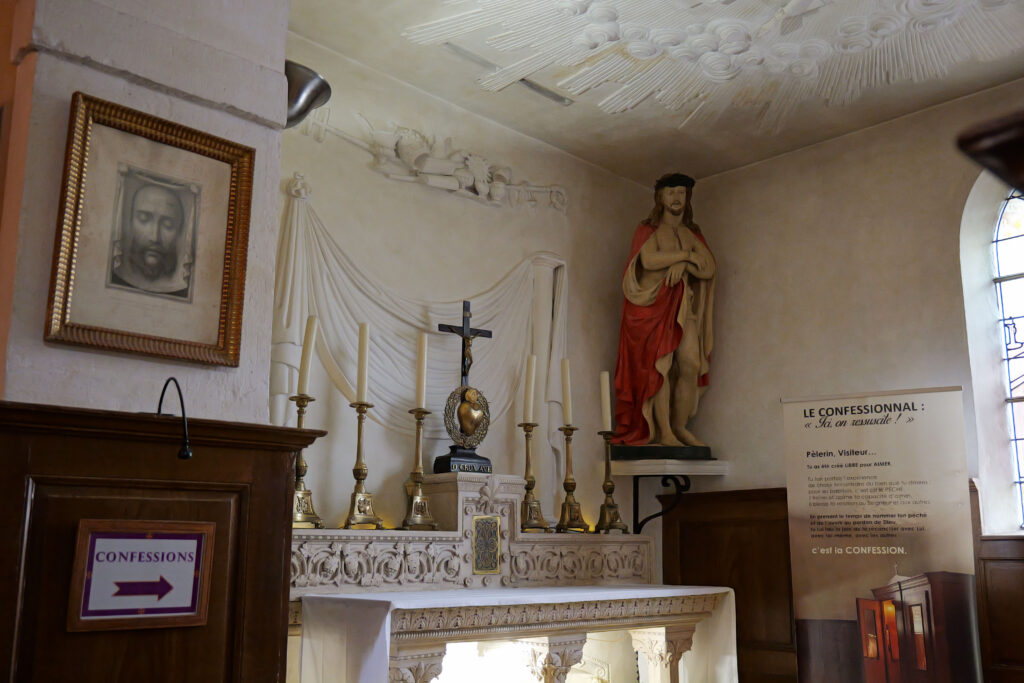
St. John Vianney had experienced God’s mercy and forgiveness, and he generously shared this gift with others in the sacrament of penance. In the last 20 years of his life, around 20,000 people came to him for confession each year. They would often wait as long as a week to finally go to confession to him.
Legacy and Prayer
St. John Vianney has famously said that the priesthood is the love of the heart of Jesus. These words are reflected in his own priestly ministry towards the people he served. Despite the unforgiveness he experienced from his own father, John Vianney still encountered the powerful love and mercy of Christ that flows from the Sacred Heart of Jesus and softens even the hardest of hearts.
We will conclude with a prayer composed by St. John Vianney that perfectly encapsulates the complete transformation that he experienced through the grace of Christ:
“I love you, O my God, and my only desire is to love you until the last breath of my life. I love you, O my infinitely lovable God, and I would rather die loving you, than live without loving you. I love you, Lord, and the only grace I ask is to love you eternally. My God, if my tongue cannot say in every moment that I love you, I want my heart to repeat it to you as often as I draw breath. Amen.”