

Fr. Matthew Mary | June 3, 2026
The Feast of St. Charles Lwanga and His Companions
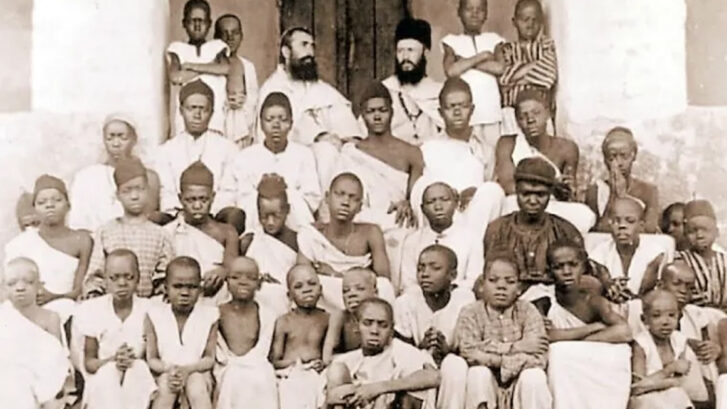
On June 3rd, the Church celebrates the feast of St. Charles Lwanga and his Companions. These remarkable saints lived during the mid-19th century in Uganda and were martyred by King Mwanga II of Buganda. The religious community known as the White Fathers, founded in 1868, were the ones who brought Catholicism to Uganda in 1879 under the reign of King Mtesa.
St. Charles Lwanga, who was born in 1865, was drawn to Catholicism through the good example set by the White Fathers, and he received baptism. When Mtesa’s son Mwanga II ascended to the throne, he initiated a severe persecution of Christians throughout the country. This period of persecution began when he attempted to lure many of his adolescent male servants into having illicit relations with him. Since many of these boys had become Catholic, they resisted the king’s sinful advances because they were entirely dedicated to their faith.
Over time, King Mwanga II developed an irrational fear of Christians, thinking that their resistance to him would encourage people to overthrow him. He decided to get ahead of any potential coup by putting Christians to death. He did not begin with slaying the boys who had resisted him, but rather the leaders of the Church who had instructed and guided the boys. Every director that was put in charge of the boys was put to death for speaking out against the crimes that the king had been committing.
“To the Death”: The Martyrdom of the Pages
Following his baptism, St. Charles Lwanga was placed in charge of the pages, the boy servants of the king, which afforded him the perfect opportunity to catechize and baptize the boys under his direction. When King Mwanga learned of Charles Lwanga’s evangelizing activities, he ordered Charles and all the pages to appear before him where he commanded them to renounce Christianity or suffer the consequences.
In response, Charles Lwanga and the pages under his direction courageously shouted, “To the death.”
King Mwanga condemned all of them to death, including St. Charles Lwanga and fifteen of the young pages who had been under his direction. They were all bound together and taken for a two-day journey to Namugongo, where they were burned at the stake.
Charles Lwanga was separated from the rest of the company and was burned at the stake alone. His executioners first slowly burned his feet as if to subject him to cruel torture. As his feet began to burn, the executioners promised to let him go if he agreed to renounce his faith right then and there. Charles remained steadfast and said to them:
“You are burning me, but it is as if you are pouring water over my body.”
As his entire body was engulfed in flames, he could be heard crying out in a loud voice before he died, “Katonda! – My God!” Altogether, there are 24 Ugandan protomartyrs who have been canonized as saints.
An Inspiration for Generations to Come
The hearts of these courageous martyrs were aflame with the same zeal and love of the Holy Spirit that inspired St. Paul to willingly lay down his life for the sake of the Gospel. They could say with St. Paul that their life is of no importance to them and that they only wish to bear witness to the Gospel of God’s grace.
Despite the sufferings and the brutal treatment that they received from the hands of their persecutors, they persevered in the truth and shed their blood, thus providing the seed of Christianity in their native Ugandan soil that would bear fruit for generations to come.
These holy martyrs are an inspiration for all Christians as they encourage us by their example to persevere in the faith even in the face of hardships, persecution and the threat of death. Saints such as the Ugandan martyrs provide the most eloquent witness to the Gospel by offering their lives for the love of Jesus Christ.
May God continue to bring us nearer to the goal of the eternal kingdom.